
Disclosure: As an Amazon Associate I earn from qualifying purchases. How this site works
Where to Buy Resistance Bands
Each category below links to current listings on Amazon (opens in a new tab). Use this checklist to compare resistance bands before you buy.
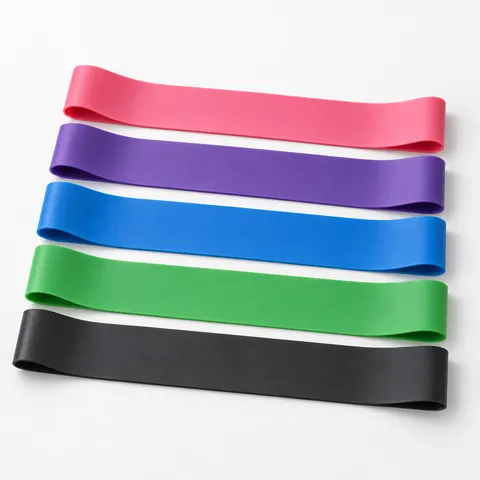 Mini loop band sets
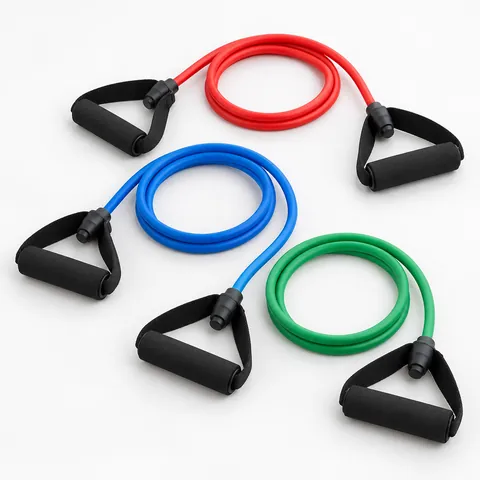 Tube bands with handles
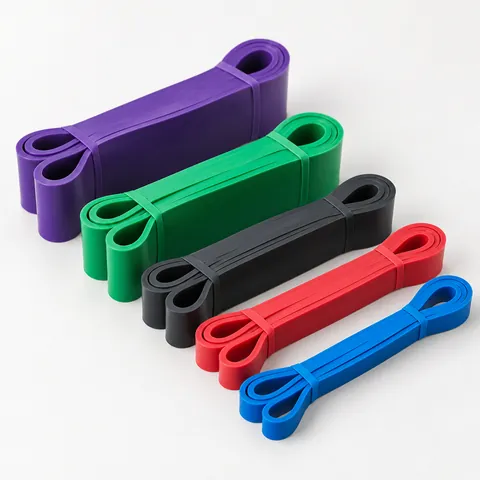 Pull-up assistance / power bands
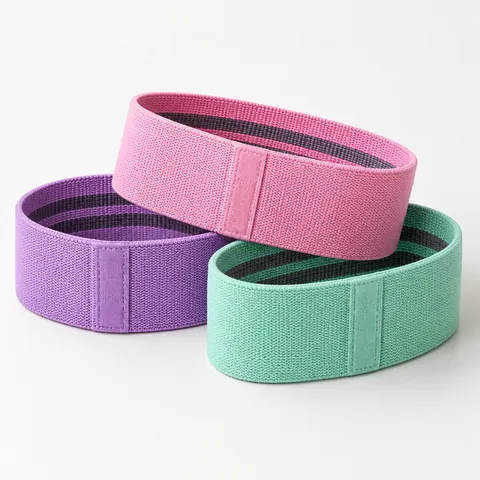 Fabric booty bands
Before you buy
- Choose the band type for your exercises.
- Check the resistance range of each level.
- Check material for latex allergies.
- Look for door anchor, handles and ankle straps if needed.
- Read warranty and replacement terms.
Categories referenced on this site
In a store
Stretch the band gently to feel the resistance and check the finish for any nicks or weak spots.
Is it better to buy resistance bands online or in a store?
Buying online usually gives you the widest choice of band styles, resistance levels, colors, and bundle options. It is also easier to compare what is included in the set, such as handles, a door anchor, a carry bag, or a printed exercise guide. The trade-off is that you cannot feel the stretch before you buy, so you need to rely on clear product photos, written specifications, and the return policy.
Buying in a store is better if you are unsure how heavy a band should feel or you want to inspect the material before paying. Sporting goods stores, big-box retailers, physical therapy supply shops, and some fitness sections in department stores may carry common loop bands, tube bands, and heavier power bands. Selection is often smaller, but you can check the packaging, grip texture, and band thickness in person.
| Where to buy | Best for | Main drawback |
|---|---|---|
| Online marketplace | Largest selection and easy side-by-side comparison | You cannot inspect the band before delivery |
| Sporting goods store | Trying common resistance levels and checking build quality | May have fewer sizes or set combinations |
| Physical therapy or rehab supplier | Basic rehab-style bands and controlled progression | May focus on simple flat bands rather than full workout kits |
| Discount or general retail store | Low-cost starter bands for light use | Packaging may provide limited resistance details |
What kind of resistance band should I buy for my workouts?
Start with the movement you plan to do most often. A band that works well for pull-up assistance may be too large for hip work. A small loop band that works for side steps will not replace a tube set for rows, presses, or curls. If you want one general-purpose purchase, look for a set with several resistance levels rather than a single band.
- For glute activation, hip abduction, lateral walks, and warmups, a mini loop band set is the most compact choice.
- For upper-body exercises that mimic cable-machine movements, a tube band set with handles is usually easier to grip and anchor.
- For assisted pull-ups, stretching, mobility drills, and heavier lower-body work, a pull-up assistance band offers a longer continuous loop.
- For users who dislike latex rolling or pinching on leg exercises, fabric bands may feel more stable around the thighs, but they are usually less versatile for upper-body movements.
If more than one person will use the bands, choose a set with a broad spread of resistance levels. Beginners often need lighter bands for shoulder work and heavier bands for lower-body moves. Stronger users may still need light bands for warmups, rehab-style exercises, or high-rep movements.
How do I compare resistance band listings online?
Look past the main product photo. The useful details are usually in the specification chart, package contents, resistance labeling, and return information. A good listing should make it clear what type of band you are buying, how many bands are included, and whether the accessories shown in the photos are part of the package.
- Confirm the band style. Check whether the product is a flat mini loop, a tube with handles, a long power loop, or a fabric loop.
- Check the resistance labels. Some sellers use pounds, some use light to heavy labels, and some use both. Treat color coding as seller-specific because colors are not universal.
- Read the dimensions. For loops, check length and width. For tube bands, check tube length and whether handles are removable. For power bands, check loop length and band width.
- Review what is in the box. Do not assume a door anchor, handles, ankle straps, or storage bag is included just because it appears in a lifestyle photo.
- Scan recent customer photos when available. They can help you see packaging, band width, handle size, and whether the product looks like the listing photos.
- Check the return window before ordering. This matters if the resistance feels too light, too heavy, or uncomfortable once you try it.
Be cautious with listings that do not show the actual band dimensions, do not explain the resistance levels, or use vague terms such as professional grade without specific details. Resistance bands are simple products, so the listing should be straightforward.
What should I avoid when buying cheap resistance bands?
Low-cost bands can be useful, especially for beginners, travel, warmups, and light rehab-style movements. The problem is not the low price by itself. The bigger issue is when the listing or packaging does not give you enough information to know what you are buying.
- Avoid bands with visible cracks, chalky spots, uneven edges, or thin areas in the material.
- Avoid tube sets if the handles, clips, or connection points look flimsy or poorly attached.
- Avoid door anchors with rough stitching, exposed hard edges, or foam that looks too small to stay secure behind the door.
- Avoid buying a single very-heavy band as your first band unless you already know the resistance you need.
- Avoid relying on color alone when replacing a band, because one seller's medium can feel like another seller's heavy.
For any band, inspect it before the first workout. Stretch it slowly, look for weak spots, and make sure attachments are fully seated. If a band has a strong odor, powdery residue, sticky surface, or damaged hardware, stop using it and follow the seller's return or replacement process.
What accessories are worth buying with resistance bands?
Accessories are only worth paying for if they match your exercises. A complete kit can be convenient, but extra parts also create more pieces to store and inspect. If you mainly do hip and leg activation drills, you may not need handles or a door anchor. If you do rows, presses, face pulls, or standing core work, an anchor and handles can make the band easier to use.
| Accessory | When it helps | What to check |
|---|---|---|
| Door anchor | Rows, presses, pulldowns, and core exercises at different heights | Padding, stitching, and whether it fits securely on the hinge side or latch side as directed |
| Handles | Exercises where grip fatigue limits the movement | Comfort, clip quality, and whether the handle rotates freely |
| Ankle straps | Standing hip work, kickbacks, and leg curls | Padding, closure strength, and metal ring placement |
| Carry bag | Travel or keeping a multi-band set together | Enough room for bands and accessories without forcing sharp bends |
If you buy accessories separately, make sure they are intended for resistance band use. Hardware that is not designed for exercise may not handle repeated stretching, pulling, and angle changes.
Frequently asked questions
Where can I buy resistance bands near me?
Check sporting goods stores, big-box retailers, department stores with fitness sections, and physical therapy supply stores. Selection varies by location, so call ahead if you need a specific style such as a long power band or a fabric loop band.
Can I buy just one resistance band instead of a set?
Yes, but a single band is best when you already know the resistance level and style you need. A set is more flexible because different exercises often require different tension levels.
Are resistance bands from online marketplaces safe to use?
They can be, but you need to inspect them like any other fitness product. Check the listing details before buying, then examine the band, seams, clips, and anchors before the first workout.
What is the best resistance band for beginners to buy?
Most beginners do better with a set that includes light, medium, and heavier options. Choose the style based on your workouts: mini loops for lower-body activation, tubes with handles for general strength moves, or long power bands for assisted pull-ups and stretching.
Disclosure: As an Amazon Associate I earn from qualifying purchases. This site may earn a commission when you buy through its links, at no extra cost to you. Product details come from public manufacturer information; always check the merchant page for current specifications and prices. We have not hands-on tested the products described here.