
Disclosure: As an Amazon Associate I earn from qualifying purchases. How this site works
Resistance Band Exercises
This routine uses a tube band with handles and a mini loop. Warm up for five minutes first.
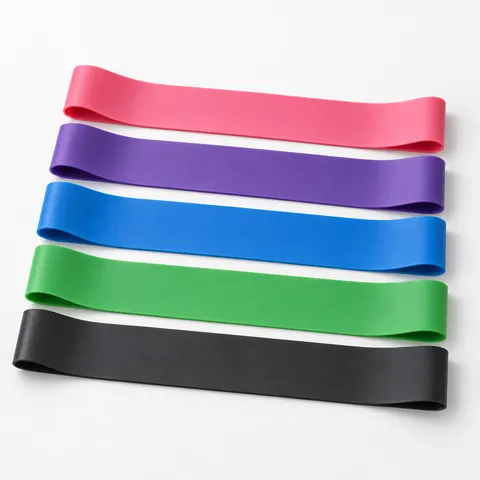 Mini loop band sets
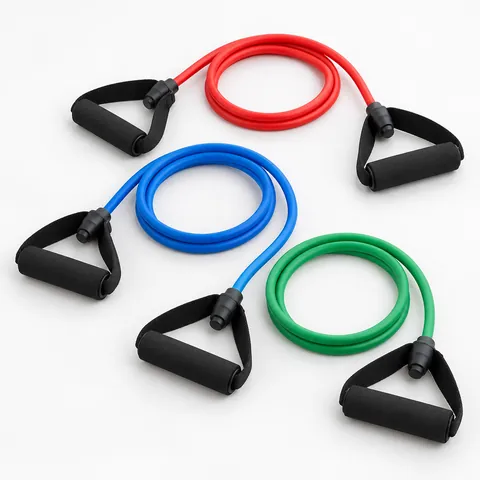 Tube bands with handles
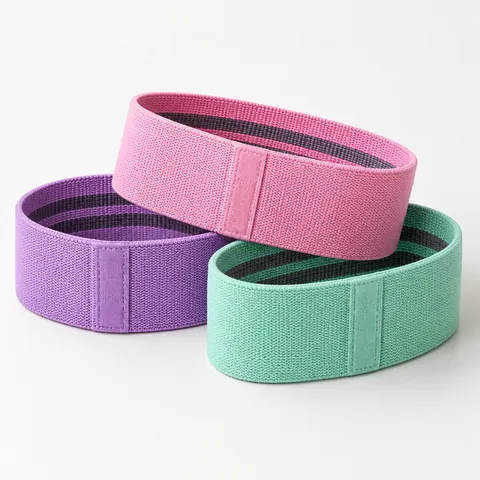 Fabric booty bands
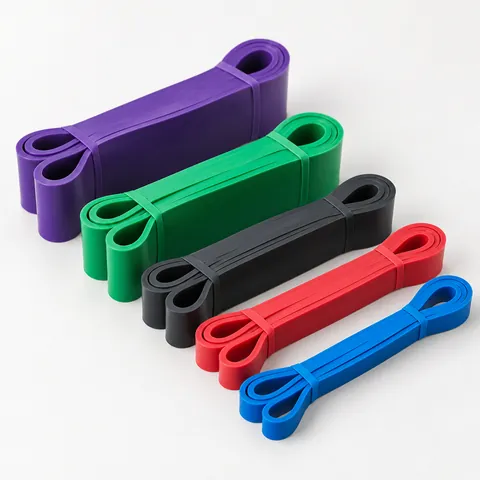 Pull-up assistance / power bands
The routine
| Exercise | Band | Sets × reps |
|---|---|---|
| Squat (band under feet, handles at shoulders) | Tube | 3 × 12 |
| Seated or standing row (anchored) | Tube | 3 × 12 |
| Chest press (anchored behind) | Tube | 3 × 12 |
| Glute bridge (loop above knees) | Mini loop | 3 × 15 |
| Overhead press | Tube | 3 × 10 |
| Lateral band walk | Mini loop | 3 × 10 steps each way |
Progressing
- Add reps until the top of your range feels easy, then move to a stronger band.
- Slow the lowering phase to 3 seconds.
- Combine bands for more resistance.
Need more levels? Compare tube band sets and mini loop sets.
How do you set up resistance bands safely at home?
Good setup matters because a band is under tension the whole time. Before each workout, look over the band in bright light. Do not use it if you see cracks, thin spots, tears near the handle, loose stitching, or a stretched-out area that does not return to shape.
- Use a solid anchor point. A closed door with a purpose-made door anchor can work if the door closes toward you and locks or latches securely. Do not anchor to a loose table leg, rolling chair, towel bar, or anything that can move.
- Stand far enough away that the band has light tension at the start of the rep, but not so far that you have to lean back or twist to begin.
- Keep the band path clear of your face. For rows and presses, line the band up with your chest or shoulders instead of letting it pull across your neck.
- Step on the middle of a tube band with both feet for moves like squats and overhead presses. Make sure the band is flat under your shoes and not sitting on the edge of a sole.
- For mini loop work, place the loop just above the knees or around the ankles only when you can keep control. If your knees cave inward, move the loop higher or use a lighter band.
If your current band set has big jumps in difficulty, a tube band set with handles gives you more room to choose a level for presses, rows, squats, and curls. A mini loop band set is more useful for glute bridges, lateral walks, clamshells, and warm-up drills.
What resistance band should a beginner use for each exercise?
Pick the band by the exercise, not by color alone. Band colors are not standardized, so one company’s “medium” can feel different from another company’s “medium.” The right choice lets you finish the target reps with clean form while still feeling the last few reps.
| Exercise type | Start with | Good sign | Too heavy if |
|---|---|---|---|
| Rows and chest press | Light to medium tube band | You can keep wrists straight and shoulders down | You shrug, arch your back, or jerk the handles |
| Squats and glute bridges | Medium tube or medium mini loop | You feel hips and legs working without knee pain | Your knees cave in or your low back takes over |
| Overhead press | Light tube band | You can press without leaning back | You cannot lock out overhead with ribs down |
| Lateral band walks | Light mini loop | Small controlled steps burn the outer hips | Your feet drag or your torso rocks side to side |
| Warm-ups and rehab-style moves | Very light band | Motion feels smooth and pain-free | You strain, pinch, or lose range of motion |
A simple rule of thumb: if you can do at least 2 more reps than the plan with steady form, the band is probably appropriate. If you cannot reach the listed reps without changing your posture, step down to a lighter band or shorten the range of motion until you build control.
How often should you do this beginner resistance band routine?
Most beginners do well with this full-body routine two or three days per week, with at least one rest day between sessions. That gives your muscles, joints, and grip time to recover while still practicing the movements often enough to improve.
- Week 1: Do two workouts. Use easy-to-moderate bands and focus on learning the setup, anchor height, and form.
- Week 2: Add a third workout if you feel recovered. Keep the same bands unless all sets feel smooth.
- Week 3: Add reps to one or two exercises instead of making every exercise harder at once.
- Week 4: Move one exercise to a stronger band only if you can keep the same tempo and range of motion.
On non-band days, walking, easy cycling, stretching, or mobility work can help you stay active without turning every day into a hard workout. If you are very sore for more than a couple of days, reduce the number of sets or use lighter bands next time.
If your main goal is strength, rest longer between sets so each set stays crisp. If your goal is general fitness, shorter rests are fine as long as your form does not fall apart. Stop a set when you cannot control the band on the way back.
How do you fix common resistance band form mistakes?
Resistance bands get harder as they stretch, so many form problems show up near the end of the rep. The fix is usually to use a lighter band, stand closer to the anchor, slow down, or reduce the range until you can move with control.
- Squat: Keep your weight balanced through your midfoot and heel. If the handles pull you forward, lower the handles slightly or use a lighter band.
- Row: Start by pulling your shoulder blades back, then bend your elbows. Avoid leaning back to turn the row into a body-weight move.
- Chest press: Set the anchor around chest height. If the band rubs your arms or pulls you backward, step closer and keep your elbows slightly below shoulder height.
- Glute bridge: Press your knees gently out into the loop, but do not over-arch your low back at the top. Think about lifting with your glutes, not your spine.
- Overhead press: Squeeze your glutes and keep your ribs down. If your back arches, switch to a lighter band or press one arm at a time.
- Lateral walk: Take small steps. Keep your toes mostly forward and maintain band tension instead of letting your feet snap together.
Pain is different from effort. A working muscle can burn or fatigue, but sharp pain, joint pinching, numbness, or tingling is a reason to stop and adjust. If a movement keeps causing pain after you reduce tension and check your form, skip it and choose a similar exercise that feels better.
How can you make the routine easier or harder without changing exercises?
You do not need a completely different workout every time you improve. Small changes can make the same routine fit your current level.
- Make it easier by standing closer to the anchor, using a lighter band, doing fewer sets, or working through a shorter pain-free range of motion.
- Make it harder by stepping farther from the anchor, pausing for 1 to 2 seconds at the hardest point, slowing the return, or choosing a stronger band.
- For tube exercises, holding the band slightly lower can reduce tension, while widening your stance on the band can increase it.
- For mini loop exercises, moving the loop from above the knees to the ankles usually makes the move harder because the band has more leverage.
- For glute-focused moves, a fabric booty band may feel more stable than a thin latex loop, especially if rolling or pinching is a problem.
Change only one variable at a time. If you increase the band, add reps, and shorten rest all in the same session, it becomes harder to tell what helped and what caused your form to slip.
Frequently asked questions
Can resistance band exercises build muscle for beginners?
Yes, beginners can build muscle with resistance bands when the sets are challenging and form stays controlled. The key is progressive overload: add reps, slow the tempo, increase tension, or move to a stronger band over time.
How long should a resistance band workout take?
A beginner full-body band workout often takes about 25 to 40 minutes, depending on rest time and how many warm-up sets you do. Move slower if you are learning the exercises, because setup and control matter more than finishing quickly.
Should resistance bands feel easy at the start of each rep?
They can feel lighter at the start because bands create more resistance as they stretch. There should still be some tension at the beginning, but not so much that you lose posture before the rep starts.
Are resistance bands safe for bad knees or shoulders?
They can be a joint-friendly option because you can adjust tension and range of motion easily. However, avoid movements that cause sharp pain, pinching, or instability, and ask a qualified clinician for guidance if you are exercising around an injury.
Do I need both tube bands and mini loops?
You can start with one style, but having both makes this routine easier to follow. Tube bands with handles work better for rows, presses, and squats, while mini loops are better for hip and glute exercises.
Disclosure: As an Amazon Associate I earn from qualifying purchases. This site may earn a commission when you buy through its links, at no extra cost to you. Product details come from public manufacturer information; always check the merchant page for current specifications and prices. We have not hands-on tested the products described here.