
Disclosure: As an Amazon Associate I earn from qualifying purchases. How this site works
Loop vs Tube Bands
Both types are useful; the right choice depends on the exercises you want to do.
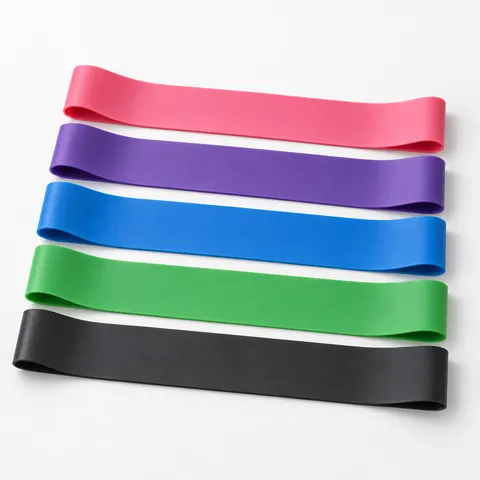 Mini loop band sets
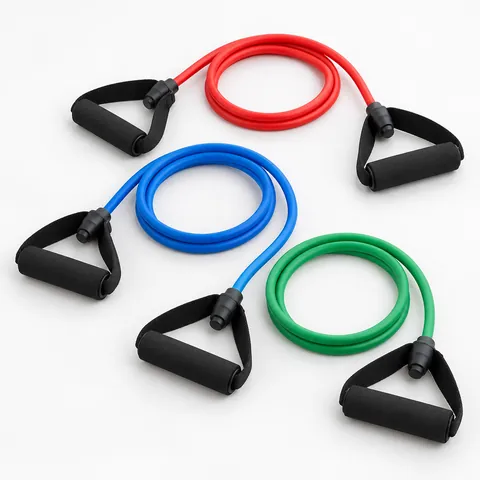 Tube bands with handles
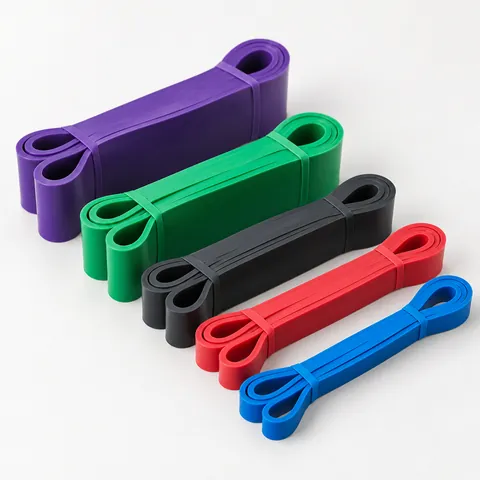 Pull-up assistance / power bands
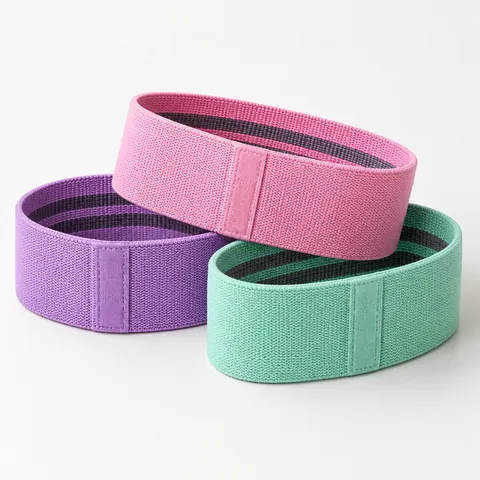 Fabric booty bands
Comparison
| Loop bands | Tube bands with handles | |
|---|---|---|
| Best for | Legs, glutes, mobility, pull-up assistance (large loops) | Upper body, gym-style presses and rows |
| Anchoring | Around legs or a post | Door anchor included in many sets |
| Resistance range | Wide with large power bands | Stackable tubes add resistance |
| Portability | Very portable | Portable with handles and anchor |
| Comfort | Fabric loops don’t roll | Handles are comfortable for grip |
Recommendation
- For lower body and glute work: mini loops or fabric bands.
- For full-body home workouts: tube bands with handles and a door anchor.
- For pull-up assistance and heavy stretches: large power bands.
Compare power bands and fabric booty bands.
Which band type matches the exercises you actually do?
Start with your exercise list, not the band shape. A loop band and a tube band can both create resistance, but they load your body in different ways. Loops are easiest when the band needs to sit around your thighs, ankles, wrists, or a fixed post. Tubes with handles are easiest when you want to pull or press with your hands in a way that feels closer to cable-machine training.
| Exercise goal | Better first choice | Why |
|---|---|---|
| Glute activation, lateral walks, clamshells | Mini loop or fabric loop | The band stays around the legs without needing a handle. |
| Rows, chest presses, curls, triceps pressdowns | Tube bands with handles | Handles make gripping easier and a door anchor gives more angles. |
| Assisted pull-ups, banded push-ups, heavy hinges | Large loop power band | The continuous loop can support body weight or wrap around a bar. |
| Stretching shoulders, hips, and hamstrings | Loop band | You can hold the loop or anchor it without extra parts. |
| Travel workouts in a hotel room | Either, depending on anchor access | Loops need almost no setup; tubes add variety if you have a safe door. |
If you mostly train legs and want something simple, look at mini loop band sets or fabric loops. If you want one compact kit for presses, rows, curls, and pulldowns, tube bands with handles are usually easier to use.
How much resistance should you buy?
Choose a range, not a single band. Resistance bands get harder as they stretch, so the listed tension is not as simple as a dumbbell weight. A band that feels manageable at the start of a curl may feel much harder at the top, while the same band may feel too light for a squat or row.
- For warmups and rehab-style movements, include at least one light band that you can control without shrugging, jerking, or shortening your range of motion.
- For glute and leg work, choose a medium or heavy mini loop only if you can keep your knees tracking well. Too much resistance can make your form worse.
- For upper-body pulling and pressing, a tube set with several resistance levels is more useful than one very hard tube.
- For pull-up assistance, use a large loop that gives enough help to reach full range, then move to a lighter band as you get stronger.
- For mobility, avoid max-resistance bands. You want controlled tension, not a tug-of-war.
A good rule of thumb: the last few reps should be challenging without changing the movement. If you have to lean, twist, bounce, or shorten the rep to finish, the band is too strong or stretched too far. If you can do many clean reps with no slowdown, move up in resistance, step farther from the anchor, or use a thicker band.
Are tube bands safe to use with a door anchor?
Tube bands can be safe with a door anchor when the door, anchor, and setup are appropriate. The risk is not the handle itself; it is a poor anchor point, a weak door, or standing on the wrong side of the door. Always inspect the setup before you put your full effort into a rep.
- Use a solid door that closes securely. Avoid hollow, damaged, or loose doors.
- Anchor on the hinge side when possible, because the door closes into the frame instead of pulling open toward you.
- Lock the door if you can, or make sure no one can open it during your set.
- Thread the anchor fully so the stopper is on the opposite side of the door and cannot slip through.
- Start each exercise with a few gentle reps before applying full force.
- Stand so the band is not aimed at your face or neck if something slips.
- Stop using any tube that has cracks, flat spots, exposed cord, or sticky, brittle rubber.
Loops can also be anchored around posts, racks, or heavy furniture, but the same inspection rules apply. The anchor should not move, tilt, scrape the band, or have sharp edges. A smooth, fixed point is safer and helps the band last longer.
What should you check before buying loop or tube bands?
The best band is the one you will use correctly. Before buying, look at comfort, setup, resistance options, and the space you have. A small detail, such as a rolling latex loop or a door anchor you cannot use in your apartment, can make an otherwise good set frustrating.
- Material: Latex and rubber bands stretch well but may roll or pinch on bare skin. Fabric loops feel more stable for leg work but usually are not meant for long, high-stretch movements.
- Grip: Handles are useful for high-rep upper-body exercises. Bare loops are more versatile for wrapping, stepping, and looping around bars.
- Length: Short mini loops are for legs and activation drills. Long loops and tubes give you more room for rows, presses, hinges, and assisted bodyweight exercises.
- Anchoring: Tube kits often depend on a door anchor. Loop bands can use a post, bar, or your own body as the anchor.
- Progression: Multiple bands let you progress gradually. Stacking tubes can increase resistance, but only if the clips, handles, and anchor are designed for it.
- Storage: Keep bands out of direct sun, heat, and sharp surfaces. Clean sweat off after use and let fabric bands dry before storing.
If your main problem is that rubber mini loops roll up during squats or walks, fabric options are worth considering. See fabric booty bands if lower-body comfort is your deciding factor.
Frequently asked questions
Can tube bands replace dumbbells?
Tube bands can replace dumbbells for many home exercises, especially rows, presses, curls, and shoulder work. They feel different because resistance increases as the band stretches, while a dumbbell’s weight stays the same. For building a basic home routine, tubes are useful, but they are not a perfect match for every dumbbell movement.
Do loop bands or tube bands last longer?
Either type can last a long time if you avoid overstretching, sharp edges, heat, and sunlight. Tubes add hardware such as handles, clips, and anchors, so you should inspect those parts as well as the rubber. Replace any band that shows cracking, splitting, thinning, or a change in texture.
Are fabric loop bands better than rubber loop bands?
Fabric loop bands are often more comfortable for glute and thigh exercises because they are less likely to roll or pinch. Rubber mini loops usually stretch more and pack smaller, which can make them better for warmups, rehab-style drills, and travel. Pick fabric for comfort around the legs and rubber for maximum compactness and stretch.
Can beginners use power bands?
Yes, beginners can use large power bands, but they should start with simple movements and controlled tension. They are especially useful for assisted pull-ups, stretching, and anchored rows. Avoid wrapping them around rough surfaces, and do not use a band so heavy that it snaps your body out of position.
Should I buy loops and tubes together?
Buying both makes sense if you want a broad home setup without much equipment. A common pairing is mini loops for glutes and warmups, plus tube bands with handles for upper-body work. If you are buying only one first, choose based on the exercises you are most likely to do every week.
Disclosure: As an Amazon Associate I earn from qualifying purchases. This site may earn a commission when you buy through its links, at no extra cost to you. Product details come from public manufacturer information; always check the merchant page for current specifications and prices. We have not hands-on tested the products described here.